
Dyslexia Awareness Week 2026
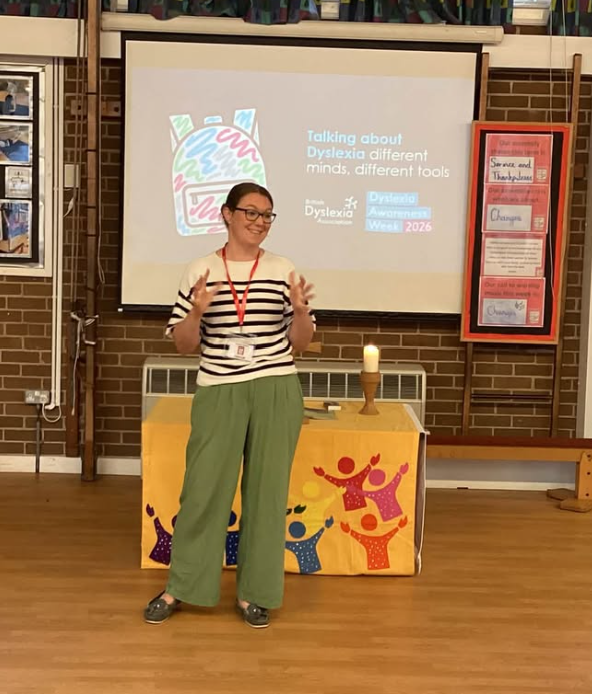
As Dyslexia Awareness Week draws to a close I’ve been reflecting on all the things I have seen and heard throughout the week.
I’ve had the privilege of speaking to some truly exceptional groups of children in my assemblies around Calderdale. Following each assembly, I’ve been approached by children wanting to share their own experiences of dyslexia. Some have wanted to tell me about the things they find difficult. Others have wanted to share the things they are good at. Some simply wanted to talk to someone who understood.
What has left the biggest impression on me is just how powerful feeling seen and understood can be. For some children, having the opportunity to talk openly about their experiences, to recognise themselves in what I was saying, and to know that they weren’t alone seemed to mean so much. They were excited to share their thoughts, their experiences and, in some cases, the challenges they face every day. Those conversations have stayed with me and are a powerful reminder of why awareness matters.
Dyslexia can look different for every individual. It can affect the way someone reads, writes, processes information, remembers things or organises themselves. But beyond the label of dyslexia, there is an individual, who deserves to be understood as such, supported and given the opportunity to thrive.
Too often, conversations about dyslexia focus solely on reading and writing. Of course, recognising those difficulties and putting the right support in place is incredibly important. But we also need to see the whole person. Dyslexia does not define someone and struggling with one part of learning does not mean that someone is less capable. It simply means that they need to be given the opportunity to learn, communicate or work in a way that allows their strengths to shine.
That is why, as Dyslexia Awareness Week comes to an end, I hope the awareness doesn’t. Awareness is an important starting point, but it needs to continue forwards into understanding and action. Early identification and intervention, appropriate support and truly inclusive education and workplaces are essential because sometimes, the right support can be the difference between someone feeling that they are struggling to fit in and someone feeling that they belong.
